
NHRL 2025 World Championships: A Night of Upsets, Fire, and First-Time Kings
By [Jimmy Havok/Sports Desk]
NORWALK, CT — In a night defined by shattered components and shattered expectations, the National Havoc Robot League (NHRL) crowned three new champions at the 2025 World Championships. From precision strikes in the lightweight classes to unprecedented incendiary dominance in the heavyweights, the event signaled a massive shift in the combat robotics hierarchy as first-time "Golden Brett" winners swept every division.
The "Prime Time" card at the House of Havoc offered a spectacle of engineering resilience and tactical innovation, culminating in a changing of the guard that saw legends fall and new icons rise.
3lb Division: The Rise of the Glass Cannon
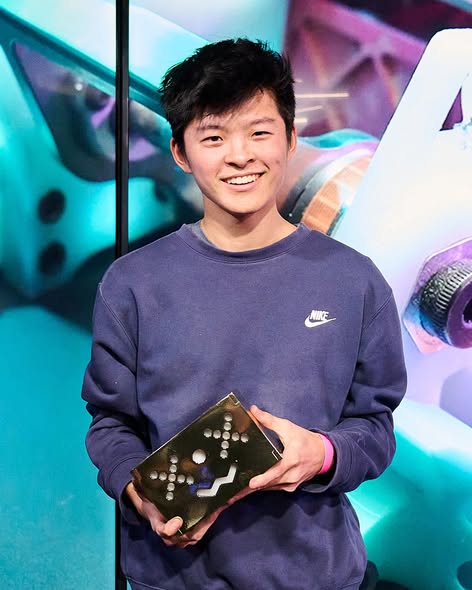
The 3lb bracket, often considered the most volatile division in the sport, lived up to its reputation with a series of bracket-busting upsets. The night belonged to Pinevictus, piloted by Alex Wang, whose high-kinetic-energy "glass cannon" design proved that the best defense is overwhelming offense.
The turning point of the tournament occurred in the semifinals, where Pinevictus delivered a stunning knockout against the perennial favorite and legendary bot Silent Spring (driven by Jameson Go). The victory cleared the path to the finals, where Wang faced off against Myles Sim’s tactical undercutter, ColdSnap.
The championship match was a masterclass in aggression. Despite Pinevictus sustaining critical structural damage to its weapon assembly early in the fight, Wang refused to back down. With ColdSnap’s mobility compromised, Pinevictus landed a series of punishing blows in the final seconds, securing a knockout victory and the Golden Brett trophy.
12lb Division: The Miracle in the Pits
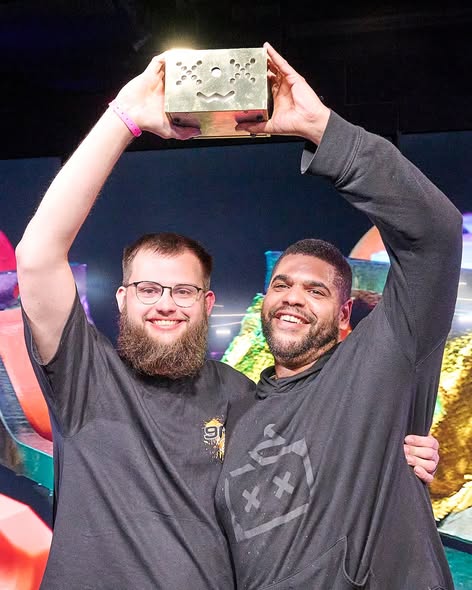
While the 3lb class was defined by on-field action, the drama of the 12lb division took place largely behind the scenes. Pramheda, driven by Zack Knight, overcame a catastrophic mechanical failure that nearly ended their championship run before the final bell rang.
Minutes before the final match against SLAM PLAN, Pramheda suffered a critical drive-side failure. In a display of pit-crew wizardry, the team managed a complete repair with seconds to spare, allowing the bot to enter the cage.
Facing Brendan Steel’s SLAM PLAN—which had previously survived a grueling, controversial match against a "snowplow" configuration from Full Court—Pramheda wasted no time. Fully operational, Knight drove Pramheda directly into the weapon-on-weapon engagement. The gamble paid off: Pramheda shattered SLAM PLAN’s signature large wheel and tore into the chassis, securing a decisive knockout in under 60 seconds.
30lb Division: Thermodynamics Over Kinetic Energy
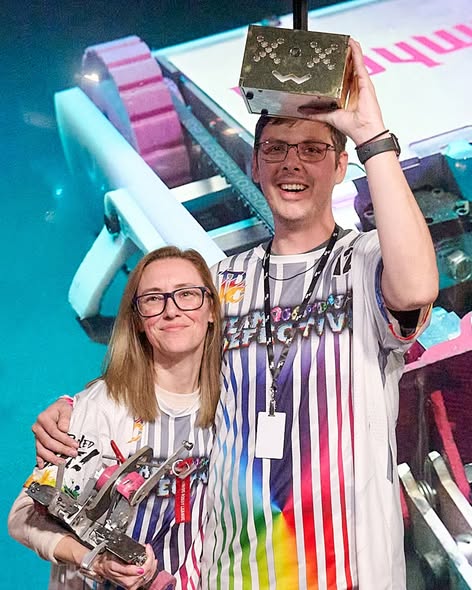
Perhaps the most significant evolution of the night occurred in the 30lb division, where KaZaA Lite, driven by Joshua Reinhardt, proved that fire is a viable championship weapon in modern robot combat.
Historically, flamethrowers are viewed as showpieces rather than fight-enders, but KaZaA Lite changed the narrative. The multibot setup utilized a grappling strategy to pin opponents against the arena walls before subjecting them to intense, concentrated heat.
After a heated (and controversial) decision win over Emulsifier in the quarterfinals, KaZaA Lite met Matt Vasquez’s Lil Lash in the finals. Vasquez had previously stopped the seemingly unstoppable shell-spinner Chonkiv, but he had no answer for the heat. KaZaA Lite pinned Lil Lash, roasting the bot until its drive belts melted and its internals failed. The unanimous decision victory marked the first time a flame-based robot has captured a 30lb title, validating a strategy previously thought impossible at this level.
A New Era
The 2025 NHRL World Championships will be remembered as the year the establishment was upended. With clean sweeps for first-time champions in all three weight classes, the event underscored the rapid evolution of the sport. The engineering gap is closing, the strategies are evolving, and as the 2026 season approaches, the target on the backs of Pinevictus, Pramheda, and KaZaA Lite has never been larger.